By: Aric Agullana
Scientific Name: Stenella Longirostris.
Spinner dolphins are probably the most frequently encountered cetacean in nearshore waters of the Pacific Islands Region. Spinner dolphins received their common name because they are often seen leaping and spinning out of the water.
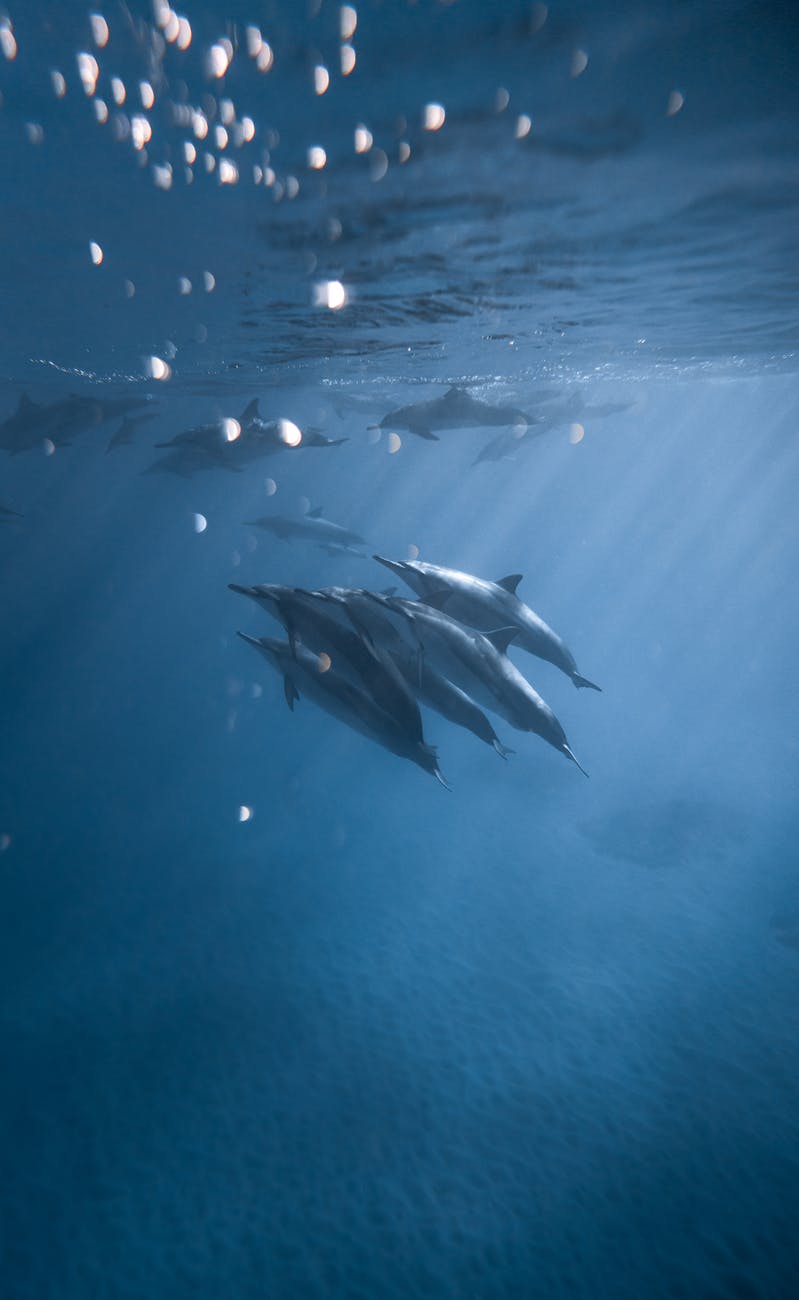
Behaviors that spinner dolphins display
Spinner dolphins feed at night on species including small fish, shrimp, and squid that are found about 650 to 1,000 feet below the surface of the water. Spinner dolphin prey species follow a vertical and horizontal migration pattern, staying in deep waters in the ocean during the day, and then moving up in the water column and inshore at night. Spinner dolphins produce a wide variety of signals: echolocation clicks, “screams”, burst-pulse sounds and harmonic and non-harmonic whistles. Vocalization rate varies between social contexts. The highest is at night
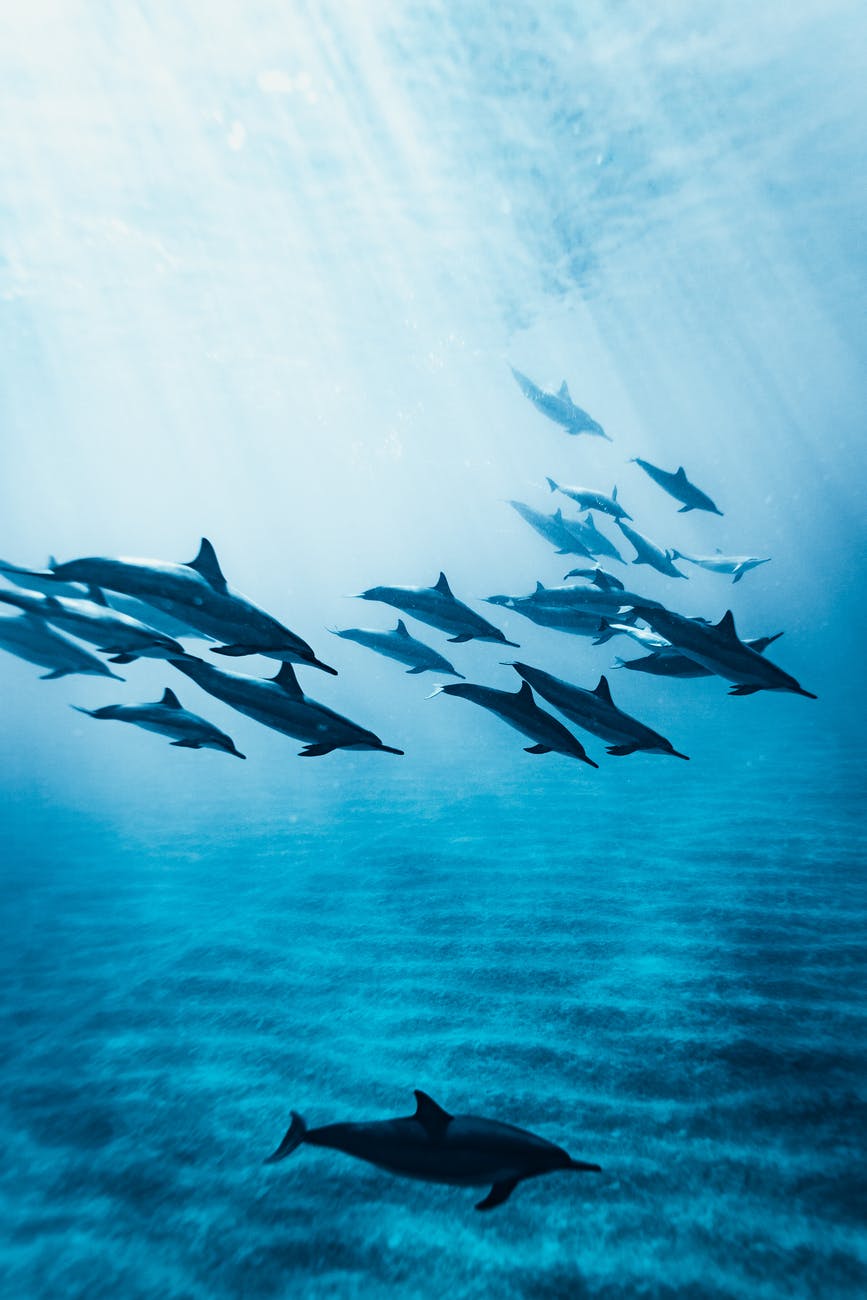
Movement patterns in Hawaii
In Hawai‘i, as in other areas where spinners have been studied, groups enter the near-shore, bay or lagoon shallows daily to rest and socialize, returning to deeper offshore waters at night to forage. the shallow, sandy-bottom and/or sheltered areas, serve as rest habitat, likely providing increased protection against predation from large sharks. During rest, a group of dolphins surfaces and dives synchronously in tight formation with little acoustic or aerial behavior.
The effects of human interactions
Hawaiian spinner dolphins are especially vulnerable to human disturbance. In Hawai‘i free-ranging spinner dolphins have been observed to actively avoid vessels, and short-term behavioral changes have been observed due to approaches by swimmers and kayaks when dolphins are resting. In recent years, efforts by humans to interact with spinner dolphins in Hawai‘i have increased and a recent comparison of the residency of the spinners in Kealakekua Bay on the Big Island shows a decrease in the proportion of days the dolphins occupy the bay.
Humans introduce sound intentionally and unintentionally into the marine environment. This could be from commercial and recreational ocean activities, navigation, oil and gas exploration and acquisition, research, and military activities. These noises can seriously disrupt communication, navigational ability, and social patterns.

Works Cited
Fisheries, NOAA. “Spinner Dolphin.” NOAA, http://www.fisheries.noaa.gov/species/spinner-dolphin#:~:text=Spinner%20dolphin%20prey%20species%20follow,(horizontal%20migration)%20at%20night.
“Hawai’i Marine Mammal Consortium.” Spinner Dolphin | Hawai’i Marine Mammal Consortium, http://www.hmmc.org/MarMammSpp/Spinner/Spinner.html.
 Aric's ENG 204 Blog